


15 Sep What Can We Accomplish in a Half Design Day?
I’ve found myself doing more Half Design Days with my clients lately, and I have to say, I’m really enjoying the format.
Putting aside seven hours to focus solely on your business can be incredibly productive. But when you’re already juggling clients, projects, family, and everything else that comes with running a business, carving out an entire day isn’t always possible. And sometimes, the project sitting on your list doesn’t need a full day.
That’s where a Half Design Day is the perfect solution.
It gives us a dedicated block of time to focus on your business without requiring you to clear an entire day from your calendar. It’s a smaller investment, both financially and time-wise, but you still get the focused attention that makes a full Design Day so productive.
You put the date on your calendar. I put the date on mine. We prepare ahead of time, clear away the distractions, and finally give those ideas, projects, or lingering problems the attention they’ve been waiting for.
A Half Design Day isn’t necessarily half a project
I think this is an important distinction.
A Half Design Day isn’t about trying to cram seven hours of work into three and a half. It’s about choosing a scope that makes sense for the time we have and focusing on what will make the biggest difference in your business right now.
Sometimes that means taking an idea you’ve been thinking about for months and finally bringing it to life.
Sometimes it means finishing all those lingering pieces that never quite made it across the finish line.
And sometimes it means tackling the frustrating technical stuff you’ve been avoiding because you don’t even know where to begin.
Bring it to life. Finish it. Fix it.
Those are three of the ways I’ve been using Half Design Days with my clients lately.
Bring it to life: Turn an idea into something people can actually buy
One of my recent Half Design Day clients knew she wanted to create a membership for her audience.
She had seen other business owners offering memberships and had looked into some of the platforms they were using. The problem was that the technology was becoming much more complicated than what she actually needed.
And that’s an easy rabbit hole to go down.
You hear that someone else is using a particular course or membership platform, so you assume that must be what you need too. Before you know it, you’re researching software, trying to learn another system, figuring out integrations, and building an elaborate setup before you’ve even sold the thing.
Instead, we started with her actual needs.
What did she want the membership to include? How often would she provide new content? How would she communicate with members? What would she charge? Was there a commitment? What would make sense for her existing audience?
Just as importantly, how comfortable was she with the technology? And how comfortable would her clients be with it?
Once we looked at the whole picture, it became clear that she didn’t need complicated membership software to get started. A private Facebook group, paired with a simple recurring payment system and a landing page on her existing website, would give her everything she needed right now.
So that’s what we built.
During our Half Design Day, we worked through the membership structure and pricing, refined what was included, created a name and branded artwork for the membership, designed the Facebook group cover, wrote and built the landing page, set up the recurring subscription through Stripe, and tested the experience.
By the end of the afternoon, someone could visit her website, learn about the membership, sign up and pay, and be directed to the private group.
The idea had become something real that she could actually start selling.
Could we make it more elaborate someday? Absolutely.
But we didn’t need to start there.
Sometimes the best thing you can do for an idea is stop researching all the ways you could build it and choose the simplest way to get it out into the world. You can always evolve it as your business grows and you learn what you and your clients actually need.
Finish it: Get those lingering brand pieces off your list
Another Half Design Day looked completely different.
This was an existing client whose larger branding and website project had already been completed. But there were still pieces of the business that hadn’t caught up with the new brand.
You know those things.
The business card you’ve been meaning to update. The printed materials that still have the old information. The social media account that technically exists but doesn’t really reflect the business anymore.
None of those things necessarily justify a huge new project on their own. So they end up on the list of things you’ll get to “eventually.”
During this Half Design Day, we finally got to them.
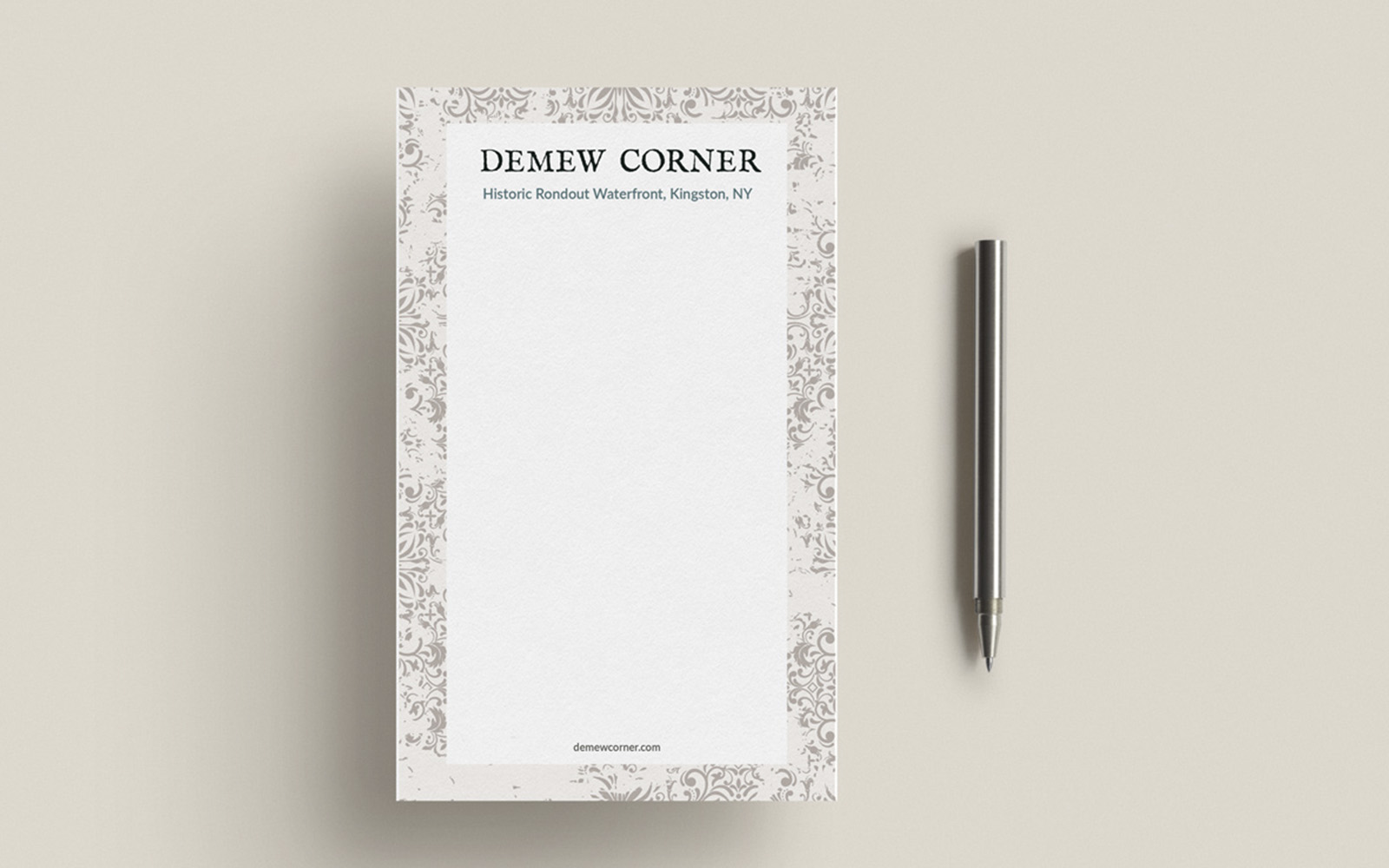
I created several directions for a new two-sided business card and refined the design she chose so it was ready for printing. We also created branded notepads for guests at her B&B, another practical piece she had been wanting to have on site.
Then we moved online and refreshed her Instagram presence so it better reflected the business we had already rebranded. We updated the profile image, worked through the very limited real estate of an Instagram bio, and connected everything back to her new website.
These weren’t massive projects.
But together, they made the business feel more complete and cohesive.
And instead of those items continuing to sit on a someday list, she left the afternoon with print-ready materials she could order and an Instagram presence that finally matched the business she had built.
Fix it: Finally tackle the things you’ve been avoiding
Then there are the things that are less glamorous but can be every bit as important.
The Google Business Profile that isn’t displaying correctly.
The business listing that still belongs to a previous owner.
The website feature that you know should work, but you haven’t been able to figure out how.
The booking software that supposedly has the functionality you need, if only you could figure out how to make all the pieces connect.
These are exactly the kinds of things business owners can lose hours trying to solve themselves.
Recently, I spent a Half Design Day with an existing client working through Google Business Profile issues after she added additional properties to her business. Some of those listings had previously belonged to someone else, which meant we had to work through ownership, claiming and verification rather than simply changing a few details.
We also updated photos and information, made changes to her website, and worked through some of the other technical pieces that had been sitting on the back burner.
Not every issue can necessarily be solved within a few hours, especially when we’re waiting on Google or another outside company to complete its part of the process. But we can get through the steps, submit what needs to be submitted, troubleshoot what isn’t working, and figure out what needs to happen next.
Most importantly, you don’t have to sit there alone wondering which button to push, whether you’re about to mess something up, or whether you should just give up and live with it.
Sometimes moving your business forward means creating something new.
Sometimes it means finally fixing the thing that has been quietly driving you crazy for six months.
But what if I don’t know exactly what I need?
That’s completely fine.
Most of my clients know what they’d like to accomplish, but they don’t necessarily know all the steps it will take to get there, what technology they need, or even what should happen first.
You don’t need to figure all of that out before we work together.
Strategy is a big part of what I bring to a Design Day. I like to look at the whole picture: your business, your goals, your audience, your brand, your website, the tools and technology you’re already using, and what you’re trying to accomplish next.
From there, I can help determine what’s most important, what order things need to happen in, and what we can realistically accomplish during our time together.
That might mean simplifying an idea before we build it. It might mean realizing that one piece needs to be completed before another will work. Or it might mean finding a much simpler solution than the one you thought you needed.
That’s one of the things I love about this way of working. Your Design Day isn’t a predetermined package or a generic list of deliverables. We customize our time together around you, your business, and what will help you move forward.
You bring the ideas, goals, problems, or even the messy list of things you’ve been meaning to figure out.
I’ll help you make sense of it and determine what comes next.
Why the focused format works
I’ve been designing websites and working with small businesses for more than 11 years, and one thing I’ve learned is that having dedicated time on the calendar changes things.
There will always be another client email to answer, another piece of content to create, another errand to run, or another task that seems more urgent.
That business card can wait.
That landing page can wait.
That Google listing can wait.
That new offer you’ve been talking about for six months can wait.
Until suddenly another six months have passed.
A Design Day puts a date on it.
Before we meet, we decide what we’re focusing on and gather what we need. On the day itself, I block off my calendar for you. You have access to my strategy, design, web development and problem-solving skills, but just as importantly, you have my undivided attention on your business and your priorities.
And because your day is customized to what you actually need, we can move between strategy and implementation instead of handing pieces of the project back and forth between different people.
My Half Design Day clients generally protect that time on their calendars, too. They’re available to answer questions, make decisions and provide information while I work. They can also use that dedicated time to tackle their own behind-the-scenes tasks.
For those few hours, we’re both focused on moving your business forward.
And I think that’s why the format feels so satisfying.
We’re not just talking about what would be nice to do someday. We’re crossing off the items on your to-do list in real time.
Ready to finally cross a few things off your list?